What Is White-Label SaaS? A 2026 Guide for Agencies That Want to Resell Without Building
White-label SaaS lets you sell software under your own brand without building it. How it works, what to look for in a partner, and how to launch in 5 steps.
SalesLabel Team
Growth Expert • 28.07.2026
Share:
Szukasz gotowego rozwiązania?
SalesLabel automatyzuje prospecting od początku do końca — AI znajduje potencjalnych klientów, wysyła spersonalizowane wiadomości i rezerwuje spotkania pod Twoją marką.
White-label SaaS lets you sell powerful software under your own brand without building a single line of code. Instead of spending two years and a fortune on developers, you take a proven platform, put your logo and colors on it, set your own prices, and sell it as your product. For agencies and consultants in 2026, it is the fastest way to add recurring revenue. This guide explains how white-label SaaS works, what to look for, and how to launch without the usual headaches.
The appeal is simple: your clients get software they trust from a brand they already know — yours — while someone else quietly handles the engineering, hosting, and updates.
What white-label SaaS actually means
White-label SaaS is a finished software product that a vendor builds and maintains, then lets partners rebrand and resell as their own. You are not reselling someone else's logo. The platform shows your name, your domain, and your pricing. Your customers may never know a third party is involved.
Compare that to two other paths agencies usually consider:
Building your own. Full control, but slow, expensive, and risky. Most agencies do not have a product team.
Reselling as an affiliate. Fast, but the customer sees the vendor's brand and you stay a middleman with thin margins.
White-label. The middle path: your brand, your margins, someone else's engineering.
Why agencies are moving to white-label SaaS in 2026
The math is hard to argue with. A service business trades hours for money. A white-label SaaS business adds recurring subscription revenue on top, and that revenue keeps coming whether or not you clock in. Three reasons it is booming:
Speed to market. You can launch in weeks, not years, because the product already exists.
Recurring revenue. Monthly subscriptions smooth out the feast-or-famine cycle of project work.
Stickier clients. A client using software with your name on it every day is far harder for a competitor to poach.
What to look for in a white-label SaaS partner
Not every "white-label" offer is truly white-label. Before you commit, run every option through this checklist.
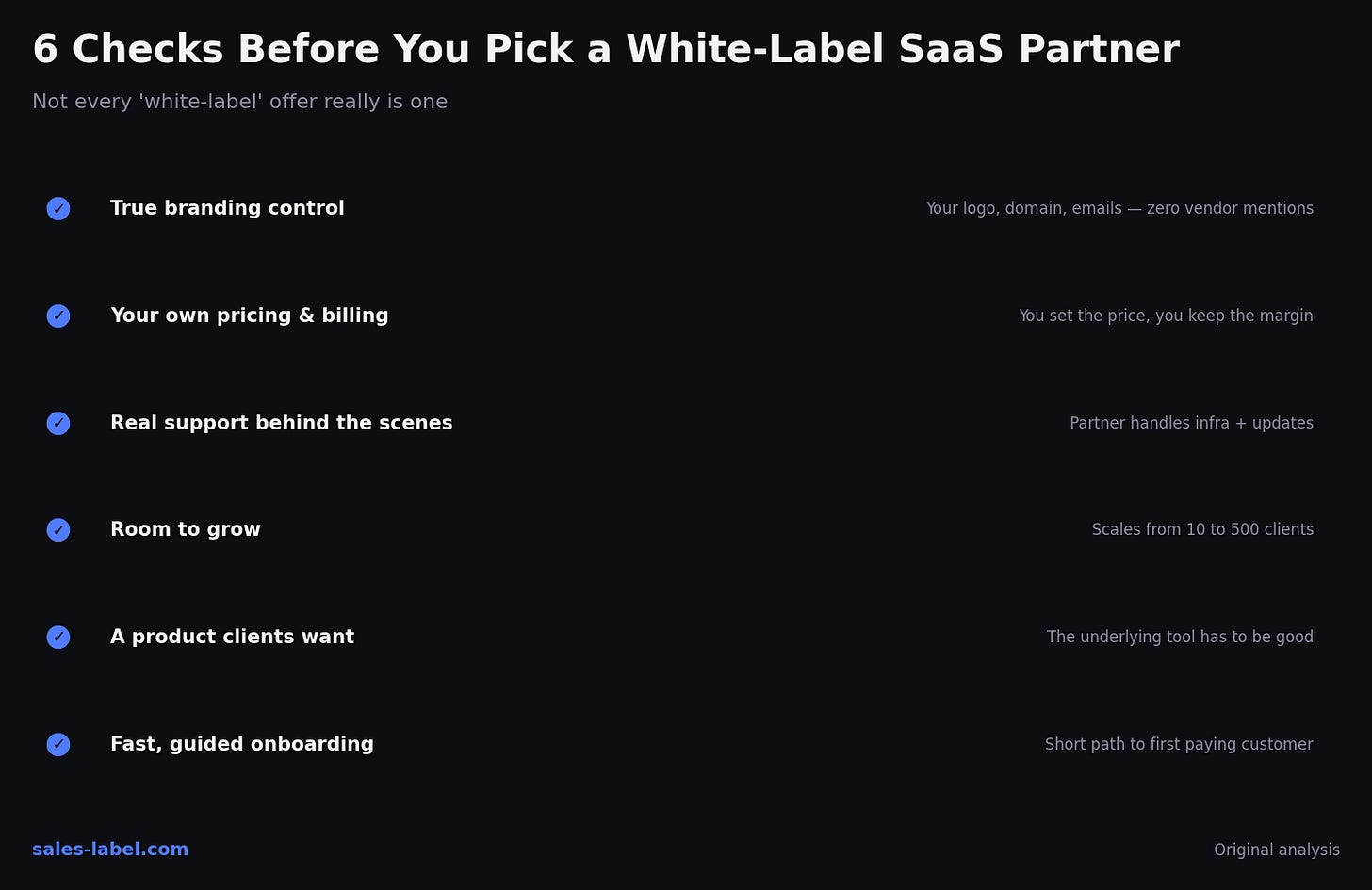
How to vet a white-label SaaS partner. Original analysis by sales-label.com.
1. True branding control
Can you set your own logo, colors, domain, and emails — with no vendor mentions anywhere the customer looks? If their name shows up in the footer or the login screen, it is not fully white-label.
2. Your own pricing and billing
You should decide what to charge and keep the margin. The best partners let you price freely and bill your customers directly, so you control the relationship and the revenue.
3. Real support behind the scenes
When something breaks, who fixes it? Look for a partner that handles infrastructure and updates quietly, so your team can focus on selling and serving clients.
4. Room to grow
Can the platform handle 10 clients and 500? Check limits on seats, usage, and accounts before you scale into a wall.
5. A product your clients actually want
Rebranding weak software just puts your name on a bad experience. The underlying tool has to be genuinely good — because your reputation now rides on it.
6. Fast, guided onboarding
The gap between signing up and selling should be short. A good partner gives you setup help, sales materials, and a clear path to your first paying customer.
How to launch your white-label SaaS in 5 steps
Once you have chosen a partner, the rollout is straightforward:
Pick your niche. Decide who you serve best — a focused offer sells faster than a generic one.
Brand the platform. Add your logo, domain, and colors so it feels unmistakably yours.
Set your pricing. Package it into simple plans that match the value your clients get.
Prepare your offer. Build a short demo and a one-page pitch tied to the outcome, not the features.
Sell to your existing base first. Your current clients are the easiest yes — they already trust you.
White-label SaaS vs building in-house: the real cost
On paper, building your own software feels like the way to keep all the value. In practice, the bill is bigger than it looks. You need developers, a designer, hosting, security, and someone to fix bugs at 2am. Then you wait a year or more before the first client can even log in. During that whole time you are spending, not earning.
White-label SaaS flips that. The product already exists and already works, so your money goes into branding, marketing, and sales instead of engineering. You start earning in weeks. And when the platform improves, you get those upgrades automatically, without paying a development team to build them. For most agencies, that is the difference between talking about a software product and actually selling one.
Who white-label SaaS is best for
White-label SaaS is not for everyone, but it is a strong fit for a few clear groups. Marketing and lead-generation agencies can hand clients a branded tool instead of just a service. Consultants can turn their advice into a product clients use every day. And established service businesses can add a recurring revenue line without changing what they already do well. If you have trust with a client base and a repeatable service, you already have the hardest ingredient.
Common mistakes to avoid
Choosing on price alone. A cheap platform your clients hate costs you far more in churn and reputation.
Skipping the demo. Test the product as a customer would before you put your name on it.
Underpricing. You are selling software plus your expertise and support — price for the full value, not just the license.
Trying to serve everyone. A clear niche makes marketing and onboarding dramatically easier.
Is white-label SaaS right for your agency?
If you already have clients who trust you and a service you deliver by hand, white-label SaaS is one of the cleanest ways to turn that trust into recurring revenue. You keep the brand and the relationship; a partner carries the engineering load. That trade is why so many agencies are becoming software companies in 2026 without ever hiring a developer.
Frequently asked questions
What is white-label SaaS?
It is software built and maintained by one company that other businesses can rebrand and resell as their own, under their own name, domain, and pricing.
How is white-label SaaS different from reselling?
A reseller sells the vendor's branded product. With white-label SaaS, the product carries your brand, so the customer sees you as the software provider and you control the margin.
Do I need technical skills to run a white-label SaaS?
No. The partner handles the code, hosting, and updates. Your focus is branding, pricing, marketing, and client relationships.
How fast can I launch?
Because the product already exists and the vendor handles the technical setup for you, most agencies can brand the platform and start selling to real paying clients within a few short weeks.
Ready to sell software under your own brand?Book a demo and become a partner — see how fast you can launch a white-label SaaS offer your clients will love.
This article was written with AI assistance and reviewed by the SalesLabel team.