White Label Lead Generation Business Model: Which of the 3 Should You Build? (2026)
A white label lead generation business model is how an agency sells lead generation under its own brand. There are three: resell a branded platform clients run, offer a done-for-you service you run for them, or combine both as a hybrid. This 2026 guide puts the three side by side in a decision table, gives a four-question test to pick yours, grounds the shared compliance rules in LinkedIn's own help page, lists the mistakes that sink each model, and shows how to launch in a week.
SalesLabel Team
Growth Expert • 23.11.2026
Share:
Cauți o soluție gata de utilizare?
SalesLabel automatizează prospectarea de la un capăt la altul — AI găseşte prospecți, trimite mesaje personalizate şi rezervă întâlniri sub brandul tău.
A white label lead generation business model is how you package and deliver lead generation under your own brand: as software your clients run, as a service you run for them, or as a mix of both. Pick the wrong one and you cap your own growth before you reach ten clients.
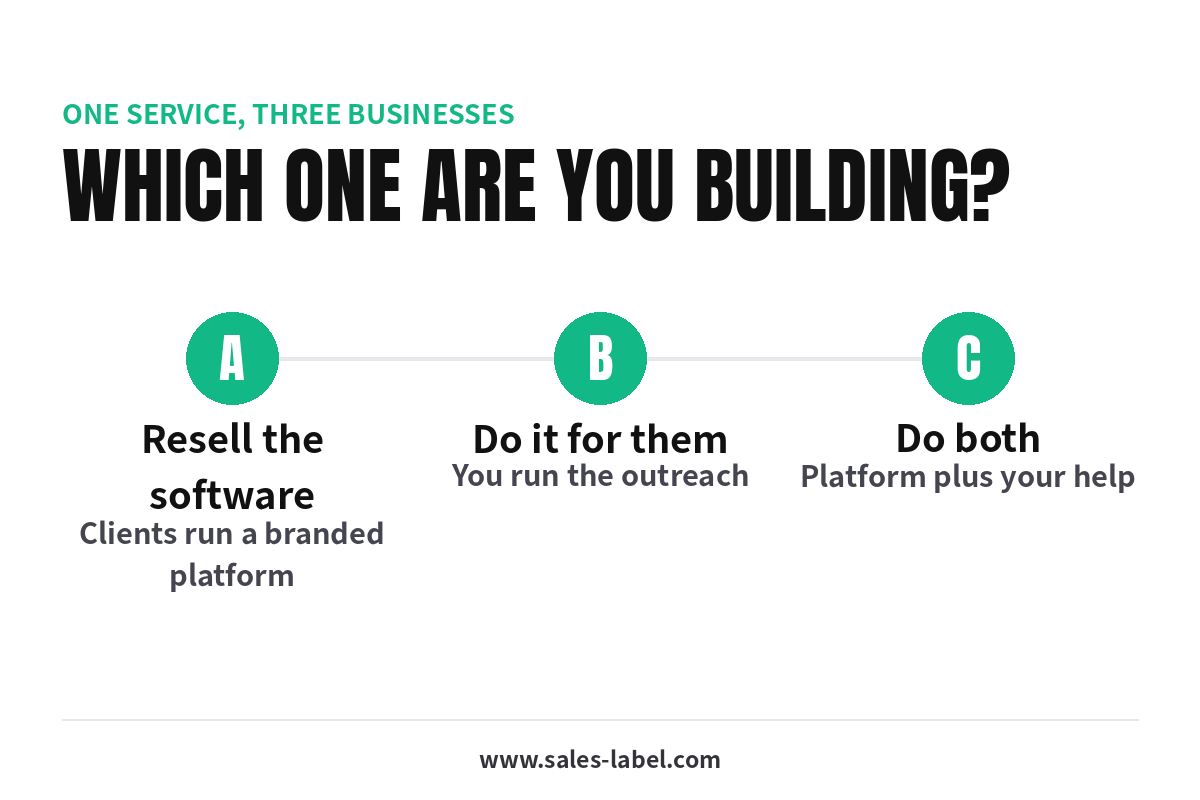
The same service can be sold three ways. Each is a different business.
The tool you resell matters less than the model you wrap around it. So let us look at all three, then help you pick.
What is a white label lead generation business model?
A white label lead generation business model is how an agency sells lead generation under its own brand. You rebrand another company's tool or service, set your own price, and keep the margin. The client sees your brand, not the vendor.
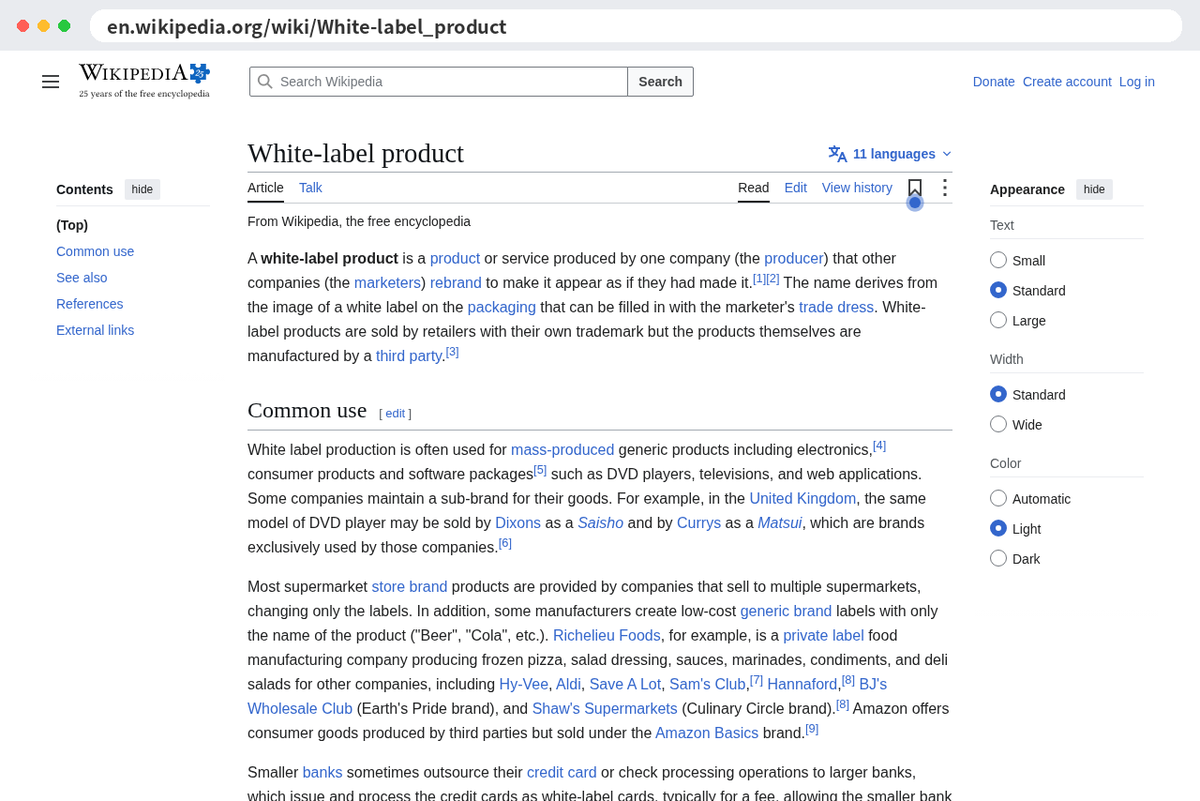
The idea is old. A white-label product is made by one company and rebranded by another, as Wikipedia's definition puts it. Wikipedia notes that many software firms now offer this to agencies, so you can resell the software under your own brand, with multi-client management and billing built in.
The white-label idea in one line: one company builds it, another rebrands it. Screenshot: en.wikipedia.org, 2026-11-23
Lead generation fits this well. The hard parts — finding people, sending outreach, booking meetings — can run on a platform you did not build. Your job is the brand, the clients and the results.
The three white label lead generation business models
Most agencies pick one of three models. They share the same goal and look alike from the outside. Inside, the work and the money are very different.
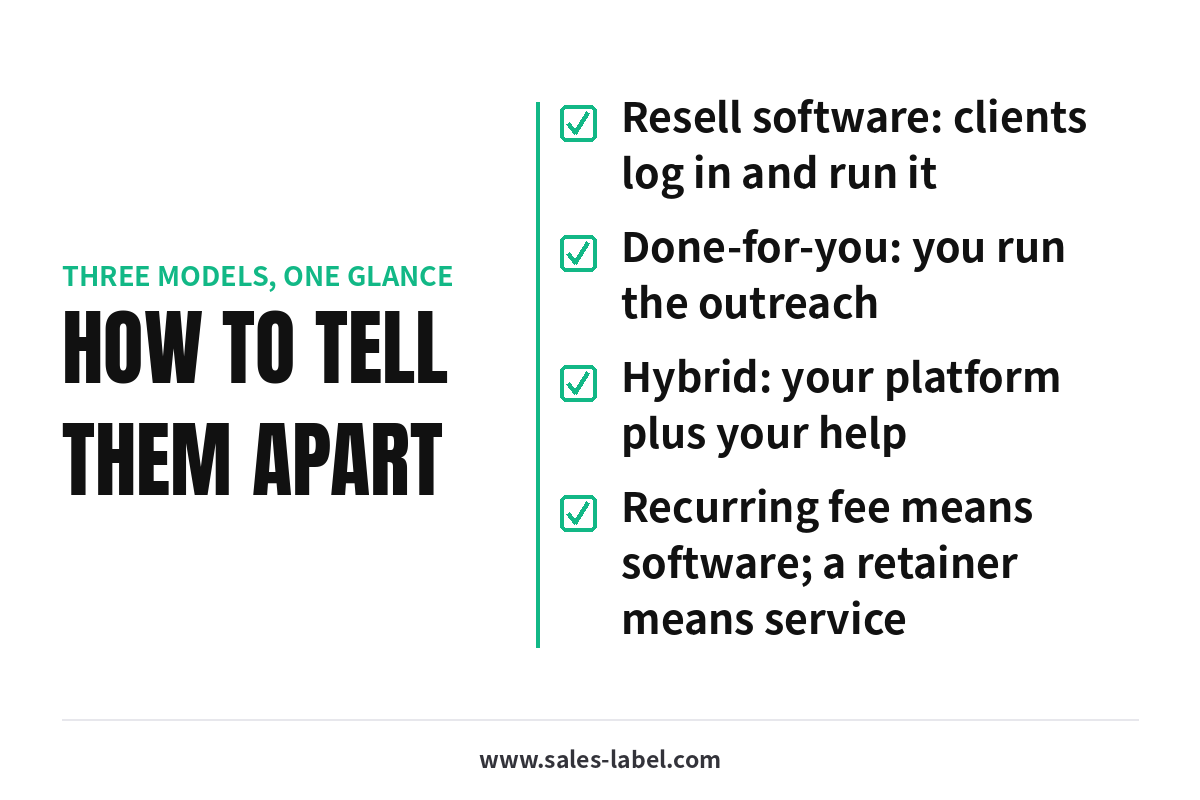
Who runs the work, and how you charge, tells you which model it is.
Model
What you sell
How you earn
Your effort
Best for
Resell the software
A branded platform clients log into
Monthly fee, your price minus the platform cost
Low: setup and support
Solo or small teams
Do it for them
A done-for-you outreach service
Retainer per client
High: you run the campaigns
Teams with people to deliver
Do both (hybrid)
Branded platform plus managed help
Software fee plus a service fee
Medium: you onboard and guide
Agencies that want sticky clients
1. Resell the software (white-label SaaS)
Here you rebrand a lead-gen platform and let clients use it. Your logo, your domain, your price. The vendor stays invisible.
The money is recurring. You pay the platform a flat fee and charge your clients more. The gap is your margin.
SalesLabel works this way, with plans that start at $799 a month while you set the client price. Delivery effort is low, so one person can serve many clients.
2. Do it for them (done-for-you service)
Here you run the outreach yourself. The client hands you a target and a goal. You book the meetings.
The price per client is higher. So is the work. You write messages, watch replies and report results. This model earns well, but it grows only when you add people. Read our guide to reseller margins before you set a retainer.
3. Do both (the hybrid)
The hybrid sells the branded platform and a layer of help on top. Clients get the software and you run or guide the campaigns.
This is the stickiest model. Clients stay because they use your product every day and lean on your team. You earn a software fee and a service fee. Most agencies land here once they have a few clients and a process.
Which model fits you?
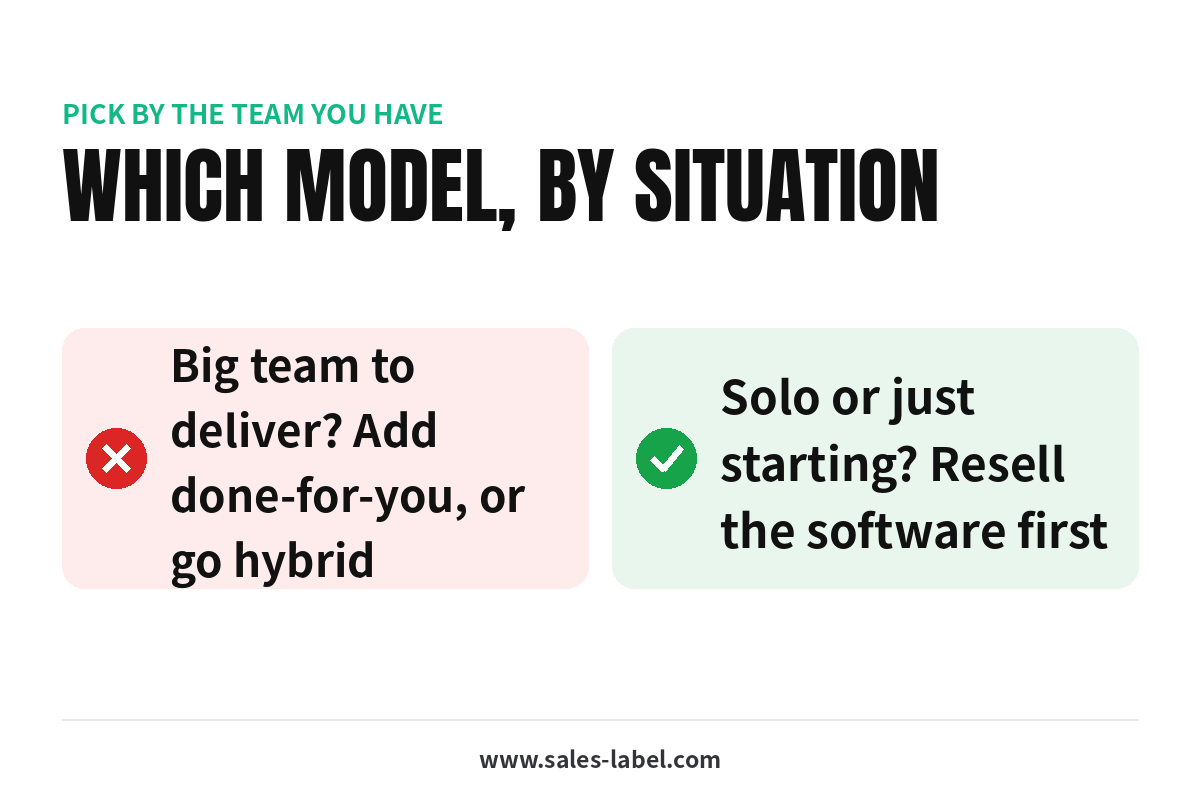
Solo or just starting? Resell the software. A real team to deliver? Add done-for-you, or go hybrid. Your answer depends on time, not ambition.
Start with the model your current team can actually deliver.
Run this quick test to choose:
Do you have people to run campaigns? No means resell the software first.
Can your clients learn a tool? Yes points to software or hybrid.
Do clients want it off their plate? Yes points to done-for-you or hybrid.
Do you want recurring revenue? Software and hybrid give it; pure service does not.
You are not locked in. Many agencies start by reselling the software, then add a service once they see which clients want more. Start simple, then stack.
The one rule every model shares: stay compliant
Whichever model you pick, delivery must respect the platform. On LinkedIn this is not optional.
According to LinkedIn's Help Center, bots and other automated tools that scrape data or send messages violate its User Agreement, and accounts that use them risk being restricted or shut down. So a safe model uses human-like limits and warm-up, not raw volume. If a tool promises thousands of actions a day, it is selling you a banned account.
This independent walk-through covers how a lead-gen agency gets built, step by step.
Each model fails in its own way. Most of these are easy to avoid once you can name them.
Recurring software fees keep paying while you sleep. That is the pull of the resell model.
Reselling software with no onboarding. Clients who never learn the tool cancel in month two.
Taking done-for-you clients you cannot staff. You sell the dream, then miss the delivery.
Pricing on your cost, not the result. A booked meeting is worth far more than a software seat.
Promising a reply rate you do not control. Replies depend on the market, not just the tool.
Pick the model that matches the team you have today, and the mistakes get smaller.
What the margin looks like (an example)
Your margin is simple. It is what clients pay you, minus what you pay the platform and your own time.
Here is an illustration, not a quote. Say your platform plan starts at $799 a month. You brand it and charge each client $1,500 a month for the tool and your support.
Two clients cover the plan, and the rest is margin before your time. Your real numbers depend on your price and plan, so model them in the margin calculator.
Done-for-you works differently. You charge a higher retainer, but you pay it back in hours. Reselling software keeps more of the margin, because the client does the work.
How to launch your model in a week
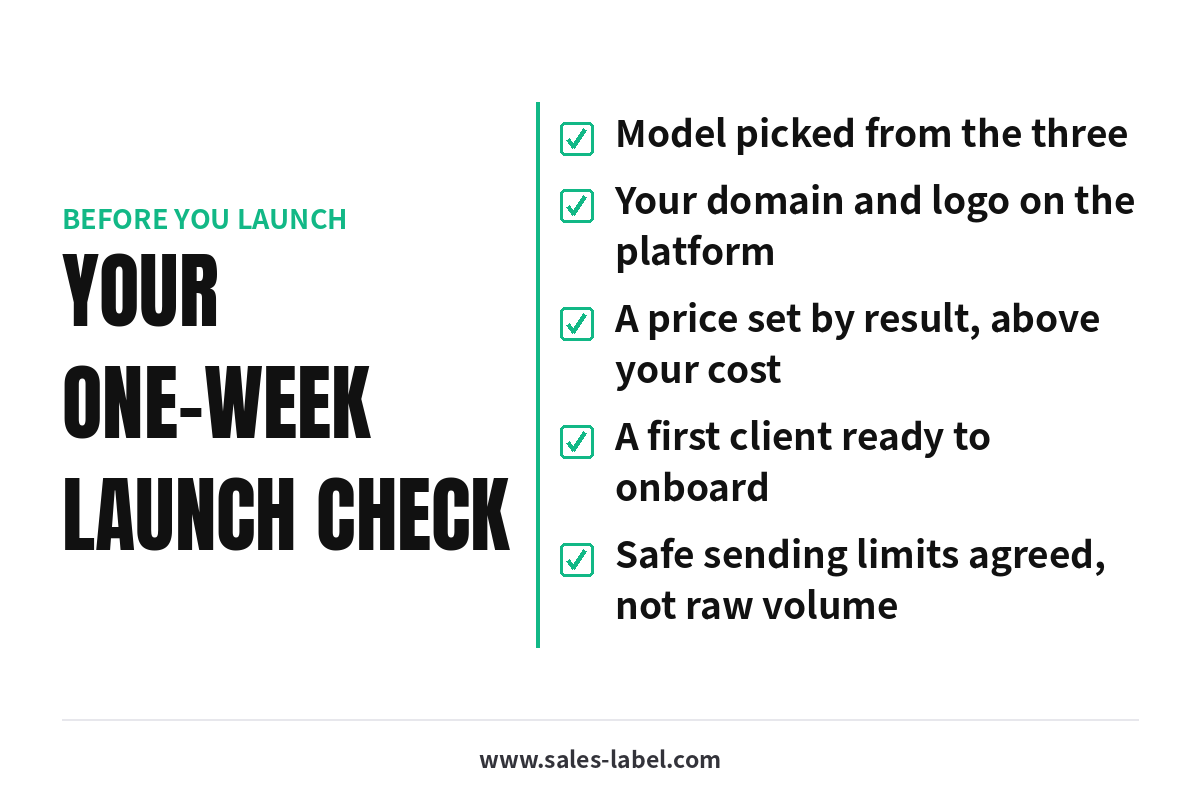
You do not need a big build. With a white-label platform, the launch is mostly decisions.
Pick your model from the three above.
Brand it: your domain, logo and name on the platform.
Set your price above your platform cost, by result.
Onboard your first client and report the first wins fast.
Run this check before you sell your first seat or retainer.
What is the best white label lead generation business model?
There is no single best model. Reselling software is best for solo operators who want recurring revenue and low effort. Done-for-you is best for teams that can deliver. The hybrid keeps clients longest and often earns the most.
Is a white label lead generation business profitable?
It can be. Your margin is the gap between what you pay the platform and what you charge clients, minus your delivery cost. Reselling software keeps delivery cost low, so the margin is cleaner. A done-for-you service earns more per client but needs people.
Software or done-for-you: which earns more?
Done-for-you earns more per client because you charge for the work. Software earns more per hour of your time because it runs itself. The hybrid aims for both, which is why most agencies grow into it.
Do I need my own tools to start?
No. A white-label platform gives you the software under your brand, so you do not build anything. You bring the clients and the brand; the platform brings the engine.
How fast can I launch a white-label lead-gen business?
With a white-label platform, a week is realistic. Most of the work is branding, pricing and onboarding your first client, not technical setup.